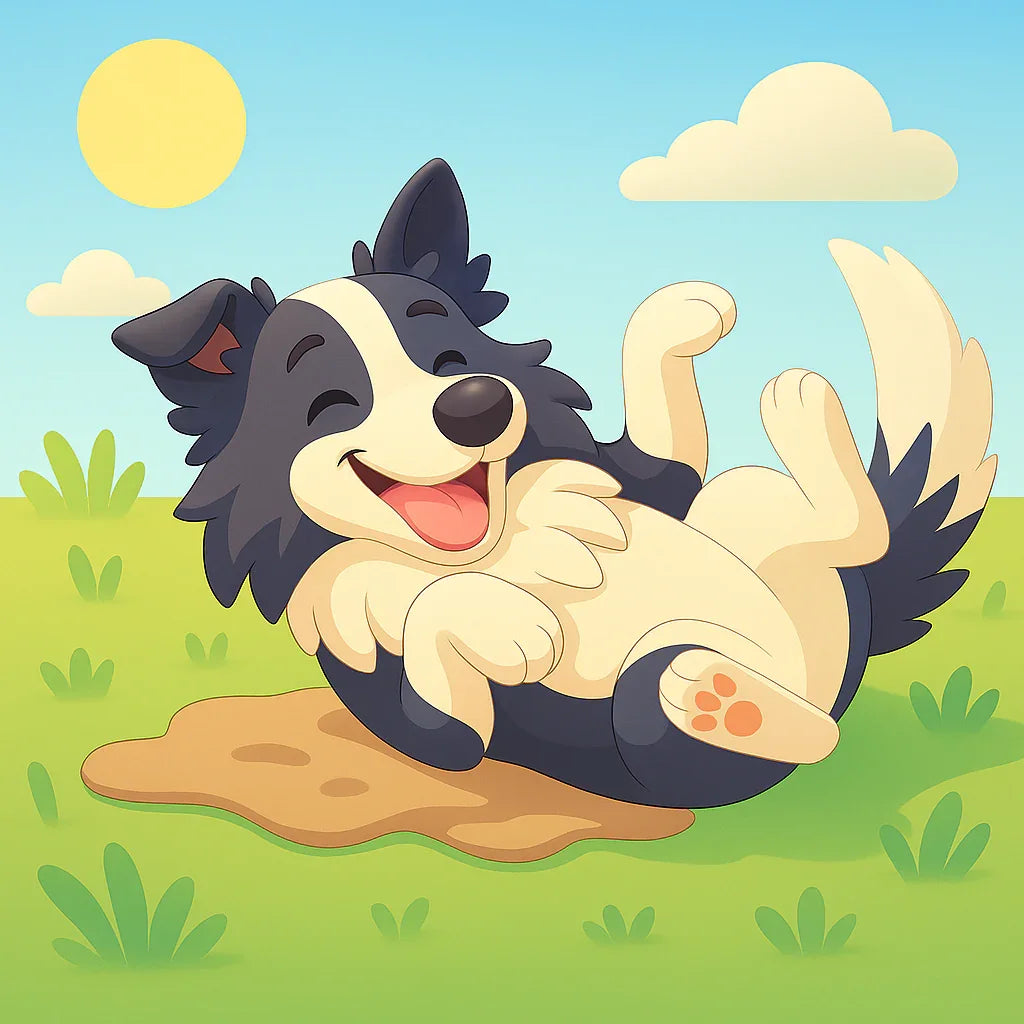
Why does a dog roll? The reasons may surprise you!
Have you ever had your dog suddenly throw themselves onto the grass during a walk and start rolling around with great enthusiasm? Sometimes it looks funny, other times it ends in a bath because they chose mud or… something much less pleasant. Many owners then wonder: "Why does a dog roll and what does it actually mean?"
It turns out that this is one of our pets' most natural behaviors, with many possible causes. In this article, we'll take a closer look at them—from instincts inherited from wolves, through play and hygiene, to possible health issues. You'll also learn when rolling is completely normal and when it's worth visiting a vet or engaging in training.

Ancestral Instinct – The Wolf Roots of Wallowing
Although our dogs are now mostly beloved family members, many of their behaviors are rooted in the nature of wolves – their wild ancestors. Rolling is one such behavior, deeply rooted in their survival instincts.
Functions of wallowing in wolves
In wolves it performed several important functions:
- masking the scent of one's own body to make it easier to approach the victim,
- taking over the scent of prey or the environment to "record" information and pass it on to the pack,
- social integration – a wolf returning to the pack with a new scent was a kind of “messenger”, and rolling became a way of exchanging information.

Inheritance in domestic dogs
Even though domestic dogs haven't hunted in packs for thousands of years, they still possess this instinct. That's why rolling in the grass, dirt, or the scent of other animals brings them so much satisfaction. It's a kind of "souvenir" of their wolf nature.
Interestingly, some breeds have retained a stronger tendency to roll than others. Hunting and herding dogs often exhibit this behavior more frequently because they have worked closely with nature for centuries and had to rely on scent.
Tarzan as communication
In the past, wolves used rolling to signal to their packs where they had found food or a potential threat. Similarly, dogs today may roll in intense scents to "tell" other dogs something—for example, that another individual has been there or that they have found something interesting.
Application
Rolling isn't a quirk, but an echo of ancient hunting and social behavior. Watching a dog roll in the grass reveals a small part of the wild wolf that still lives on in its daily habits.
The most common reasons why a dog rolls
Fun and joy
The simplest explanation: a dog rolls because... they want to play. Throwing themselves on the grass and rolling is a way for them to release their emotions and show their joy in the walk. Rolling is as natural to a dog as chasing a ball—often accompanied by a wagging tail and sparkles in their eyes. For many dogs, it's a favorite part of a walk, allowing them to relax their muscles and experience the pure joy of life.
Masking the smell
Many owners are surprised when a dog rolls in something foul-smelling. It's instinct – a dog wants to mask its own scent to blend in with its surroundings. In nature, this mechanism helped predators get closer to prey, and today it makes a dog feel more "naturally scented."
Marking the territory
Just as dogs pee on bushes to leave a trail, rolling is a way of "exposing" their scent to their surroundings. By rolling, a dog leaves a trace of its own scent on the ground. This behavior is often observed in areas frequented by other dogs—it's a kind of canine "commentary" on the scents already present there.
Self-scratching and hygiene
Rolling is a great way to scratch hard-to-reach places, like their backs. It can also be a way to soothe itching caused by allergies or dry skin. Sometimes dogs roll in freshly cut grass to remove dead hair or dust, using the ground as a natural body brush.
Cooling off in the heat
In summer, dogs often roll in the grass or dirt to cool down. Body contact with the cool surface helps lower their temperature. Breeds with shorter muzzles, especially pugs and bulldogs, may use rolling as an additional way to cope with overheating.
Reducing stress and boredom
If a dog doesn't get enough exercise and mental stimulation, rolling can be a way to relieve stress and keep them occupied. Dogs left alone in monotonous conditions may roll more often to provide sensory stimulation and add variety to their day.
Rolling around after a bath
Owners often observe their dogs rolling around on the carpet or floor immediately after a bath. This is an attempt to get rid of the shampoo's scent, which can be too intense for the dog. The tanning process restores the dog's sense of "own" scent and comfort. It's worth remembering that a dog's sense of smell is extremely sensitive – a subtle cosmetic scent may seem overwhelming to us, but to a dog.


Why does a dog roll in feces and filth?
This is perhaps the most troubling and incomprehensible dog behavior for humans. When a dog enthusiastically pounces on another animal's poop, many owners can't hide their disgust. However, from the dog's perspective, such behavior makes sense.
The instinct to mask the scent
For a dog, intense and unpleasant odors are true treasures. Rolling in feces is an attempt to mask its own scent—an echo of the wolf days, when predators had to hide their scent from their prey. This way, the dog feels less "discernible."
Information capture
The droppings of other animals are a database for dogs—they contain information about the individual's gender, health, and status. By rolling in them, dogs "stick" this scent to themselves, so to speak, and then use it to communicate with other dogs.
Intense scent as an attraction
While we find this repulsive, dogs find a strong scent alluring. Rolling in such places provides dogs with intense sensory stimulation – it's like a new, powerful olfactory stimulus for us, which intrigues and attracts them.
Health hazards
Unfortunately, rolling in feces comes with risks:
- contact with intestinal parasites,
- transmission of bacteria and viruses,
- skin and eye irritations,
- bringing unpleasant odors into the home.
How to react?
The most important thing is to quickly recall your dog before it starts rolling. Teaching the commands "leave it" and "come" is essential. It's a good idea to walk your dog on a leash in areas where feces are common. Instead of scolding, reward good behavior. If your dog has already rolled, it's best to bathe it with a gentle shampoo.
In summary: although this is one of the most unacceptable dog habits for humans, for dogs it's rooted in instinct. Our role is to set boundaries and protect our pet from health consequences.


Why does a dog roll in feces and filth?
This is perhaps the most troubling and incomprehensible dog behavior for humans. When a dog enthusiastically pounces on another animal's poop, many owners can't hide their disgust. However, from the dog's perspective, such behavior makes sense.
The instinct to mask the scent
For a dog, intense and unpleasant odors are true treasures. Rolling in feces is an attempt to mask its own scent—an echo of the wolf days, when predators had to hide their scent from their prey. This way, the dog feels less "discernible."
Information capture
The droppings of other animals are a database for dogs—they contain information about the individual's gender, health, and status. By rolling in them, dogs "stick" this scent to themselves, so to speak, and then use it to communicate with other dogs.
Intense scent as an attraction
While we find this repulsive, dogs find a strong scent alluring. Rolling in such places provides dogs with intense sensory stimulation – it's like a new, powerful olfactory stimulus for us, which intrigues and attracts them.
Health hazards
Unfortunately, rolling in feces comes with risks:
- contact with intestinal parasites,
- transmission of bacteria and viruses,
- skin and eye irritations,
- bringing unpleasant odors into the home.
How to react?
The most important thing is to quickly recall your dog before it starts rolling. Teaching the commands "leave it" and "come" is essential. It's a good idea to walk your dog on a leash in areas where feces are common. Instead of scolding, reward good behavior. If your dog has already rolled, it's best to bathe it with a gentle shampoo.
In summary: although this is one of the most unacceptable dog habits for humans, for dogs it's rooted in instinct. Our role is to set boundaries and protect our pet from health consequences.
Rolling in snow, grass and sand – what does it mean?
Rolling in the grass
This is a common sight for owners. The grass has a fresh, intense scent, and its texture is pleasant to the dog's skin. This creates a massage sensation and helps remove dead hair. Dogs often roll in freshly cut grass, as the scent of cut vegetation has a particularly strong effect on them. Rolling in the grass can also provide a cooling sensation on hot days—the grass can be cooler than the air, providing a pleasant relief for the dog.
Rolling in the snow
In winter, dogs often throw themselves into the white powder with great enthusiasm. It's a natural way to cool down and is also great fun. Snow has a different structure, consistency, and smell than grass, so dogs explore it with their whole bodies. Rolling in the snow also soothes itchy skin, acts as a gentle massage, and gives dogs a feeling of freshness. For many dogs, the first snow of the season is a real treat.
Rolling in the sand
The beach or sandbox are a thrilling experience for dogs. Rolling in the sand acts as a natural exfoliator, improving circulation and removing excess fur. Some dogs also find sand attractive due to its scent – it may contain traces of other animals or organic debris. Dogs also use sand as a way to mask their scent and as a form of muscle massage after intense running.
What connects these places?
The common denominator of rolling in grass, snow, and sand is exploration and sensory pleasure. Each surface offers a dog different tactile and olfactory stimuli, so the animal instinctively seizes the opportunity to experience them. However, owners should remember that while rolling in grass and snow is usually safe, sand can harbor glass, debris, or parasites—so it's always worth monitoring where the dog rolls.


Is rolling always normal? When does it signal a problem?
While rolling is completely natural in most cases, there are situations in which it can signal more serious health or behavioral issues. In such cases, it's worth being vigilant and taking a closer look at your pet.
Skin problems and allergies
If your dog is rolling obsessively and also scratching, licking its paws, or has red skin, it could be a sign of a contact allergy, food allergy, or atopic dermatitis. Rolling may be an attempt to relieve the itching.
External parasites
Fleas, mites, and lice cause significant discomfort in dogs. Rolling in the grass or on the carpet becomes a way for them to "massage" their bodies and relieve the discomfort. In such cases, it's necessary to use antiparasitic medications and consult a veterinarian.
Muscle pain and tension
Sometimes rolling is a reaction to bodily discomfort—for example, back pain, joint pain, or muscle tension. In these cases, the dog will roll more slowly, as if trying to massage the sore area. This is especially common in older dogs or breeds predisposed to orthopedic problems.
Behavioral problems
When rolling occurs compulsively, for no apparent reason, and in various unusual situations, it may be a symptom of anxiety disorders, boredom, or a lack of adequate stimulation. The dog may be trying to relieve emotional tension in this way.
When to go to the vet?
- if rolling is very frequent and intense,
- if it is accompanied by scratching, hair loss or skin lesions,
- when the dog seems restless or sore,
- when the behavior appears suddenly and does not go away.
In such situations, it's worth visiting a veterinarian or behaviorist to rule out illnesses and suggest appropriate solutions. This will help distinguish between a normal dog habit and a signal that your pet needs help.
Tarzan and the age of the dog – puppies, adults and seniors
Puppies – explorers of the world
For young dogs, rolling is primarily a form of play and exploration. Puppies explore the world with their whole bodies, and rolling in the grass, a blanket, or even a food bowl is a way to learn and test new sensory experiences. Rolling also helps them learn social communication – puppies often roll together, practicing interactions with their siblings.
Adult dogs – instinct and the need for expression
In adult dogs, this behavior is most diverse. They roll for joy, to cool off, to mask their scent, or to mark their territory. It's at this age that the full range of reasons for rolling is most often observed—from spontaneous rolls on the grass to persistent rolling in waste. An adult dog, therefore, combines elements of play, instinct, and hygiene in this behavior.
Seniors – massage and body relief
In older dogs, rolling may be less frequent, but it serves important purposes. It can act as a natural massage, relieving muscle tension and joint pain. Seniors often choose soft grass or carpet to gently roll and relax their bodies. However, if an older dog begins rolling more often than usual, it may be a sign of a skin condition, itching, or pain – in which case it's worth consulting a veterinarian.
Summary of differences
- Puppies – roll around for fun and learning, exploring the world.
- Adult dogs roll for various reasons: instinct, joy, hygiene, and masking their scent.
- Seniors – treat rolling as a massage, relief for the body or a signal of health problems.
Knowing that wallowing changes its meaning depending on the dog's age helps owners better understand their pet and respond appropriately to its needs.


How to stop a dog from rolling in ugly places?
Rolling in feces, carrion, or mud is a nightmare for many dog owners. While this behavior is natural for dogs, it can be effectively minimized through proper training and walk management.
Recall command training
The most important thing is to teach your dog to respond to signals like "leave it," "come," or "come." These signals can help you quickly interrupt unwanted behavior before it starts.
Step-by-step exercise – the “leave it” command
- Place the treat on the ground.
- When your dog tries to take it, cover it with your hand and say “leave it” in a calm voice.
- When the dog backs off, praise him and give him a reward from your hand.
- Repeat the exercise in different places and situations, gradually increasing the difficulty.
Leash and environmental control
- In areas where there is often feces or food leftovers, keep your dog on a leash to react faster.
- If you know that there are such “traps” in a given area, choose alternative walking routes.
Positive reinforcement
- Instead of scolding your dog for trying to roll around, reward him for good behavior – for example, approaching you quickly or paying attention.
- Treats, a favorite toy, or verbal praise work best when used consistently.
Keeping your dog occupied with other activities
A bored dog is more likely to seek out "attractions." Therefore:
- Make sure you get enough exercise and play during the day.
- Introduce scent toys, fetching, and obedience training elements – a dog that is busy cooperating with you has fewer opportunities to look for opportunities to roll around.
Patience and consistency
The process of untraining a dog can take weeks, even months. It's important to remain calm and consistent. Dogs learn best in a positive environment, so yelling or physical punishment will only make matters worse and undermine trust.
In summary, the best method is a combination of environmental control, command training, and positive reinforcement . This will teach your dog that obeying its owner is more rewarding than wallowing in the dirt.


Health Risks and How to Protect Your Dog
Rolling is a natural behavior, but it can carry serious health risks for both the dog and its owner. Understanding the risks can help you better protect your pet and enjoy stress-free walks.
External parasites
Grass, dirt, and sand are natural habitats for fleas, ticks, and mites. Rolling around, dogs can easily pick them up on their fur. Ticks transmit serious diseases, such as Lyme disease and babesiosis, which also pose a threat to humans.
How to protect your dog?
- regular use of anti-flea and anti-tick preparations (collars, drops, tablets),
- checking the coat after each walk, especially in spring and summer,
- avoiding places with tall grass and unmowed meadows during the peak season.
Internal parasites
Rolling in other animals' feces can result in ingesting parasite eggs, such as roundworms or tapeworms. As a result, your dog may become infected with intestinal worms, leading to diarrhea, weight loss, and weakness.
How to prevent?
- regular deworming as recommended by your veterinarian,
- maintaining the hygiene of the bed and bowls,
- avoiding contact with the feces of other animals.
Bacteria and viruses
Waste can contain bacteria such as Salmonella and E. coli, as well as viruses such as parvovirus. Contact with these bacteria can cause food poisoning, diarrhea, dehydration, and in severe cases, even life-threatening situations.
How to protect your dog?
- keeping vaccinations up to date,
- quick response in case of diarrhea, vomiting or apathy,
- consultation with a veterinarian at the first signs of infection.
Allergies and skin irritations
Dogs rolling in the grass may come into contact with pollen, which can trigger allergic reactions. Furthermore, pesticides and herbicides used in parks and fields can cause skin irritation, itching, watery eyes, and even poisoning.
How to protect yourself?
- observe whether the dog scratches intensely after a walk,
- rinse the coat with clean water after walking in suspicious places,
- choose areas that are not freshly sprayed with chemicals.
Risk of injury
Sand, snow, and grass can hide glass, sharp sticks, and metal objects. Rolling in such areas can cause cuts to skin, paws, or eyes.
How to protect your dog?
- carefully observe the area where the dog is rolling,
- react when there is garbage or dangerous objects in the environment,
- If injured, clean the wound immediately and consult a veterinarian.
Prevention – the golden rule
The best way to protect your dog from the health risks associated with wallowing is through regular veterinary check-ups and vigilance on the part of the owner .
Rules Summary:
- use anti-parasitic preparations,
- take care of vaccinations,
- deworm your dog regularly,
- observe the coat and skin after walks,
- choose safe places to walk.
Experts on Wallowing – What Behaviorists and Veterinarians Say
While many owners find a dog's rolling annoying, experts emphasize that it's part of the species' natural behavioral repertoire . It's important to distinguish between normal play and signs of trouble.
The Voice of Behaviorists
Behaviorists point out that rolling is a form of self-expression for dogs . It's how the animal copes with emotions—joy, excitement, and sometimes stress. Experts say that not being able to roll can be frustrating for a dog, so it's best to allow it in safe places.
Behaviorists often emphasize that rolling is a form of communication—a dog can leave its scent on the ground while simultaneously absorbing the scent of its surroundings. It's a kind of exchange of information between dogs.
Veterinarians' opinion
Veterinarians add that although wallowing is usually harmless, it's important to remember preventative measures. They emphasize the following:
- parasites,
- risk of bacterial and viral infections,
- contact allergies.
Veterinarians also emphasize that a sudden change in behavior —for example, a dog that has never rolled before but begins to do so obsessively—should be a red flag. In such cases, they recommend a visit to the vet for a diagnosis of the skin, digestive tract, and musculoskeletal system.
Joint conclusion of experts
Experts agree: dog rolling is natural behavior, but it requires conscious observation . The caregiver's role is to:
- provide the dog with the opportunity to roll around safely,
- recognize when behavior is outside the norm,
- take care of regular preventive health care.


FAQ – Frequently asked questions about dog rolling
Why does a dog roll around after a bath?
This is a very common occurrence. This is the dog's way of trying to get rid of the unfamiliar scent of the shampoo and regain "its" natural scent. It can also be a form of joy and relief after a bath. Furthermore, wet fur can be uncomfortable for dogs – rolling around acts like a natural towel.
Is rolling in the grass safe?
Yes, as long as the area is free of trash, sharp objects, or chemicals. Rolling in clean grass is a natural activity for dogs and a way to cool off. However, owners should monitor their pets closely, as the grass may harbor ticks or pollen that can trigger allergies.
Why does a dog roll in feces?
This instinct comes from our ancestors—wolves and wild dogs masked their scent to aid hunting. For modern dogs, it's a form of instinctive response that can also serve as a way to communicate with other animals through scent. Unfortunately, for their owners, this means frequent and thorough bathing.
Can you stop a dog from rolling in dirty places?
Yes, but it requires patience and consistency. Commands like "leave it" or "come" work best, along with positive reinforcement—rewarding your dog for good behavior. Additionally, it's worth limiting access to potentially "attractive" areas for rolling and offering your dog other activities during walks.
When is rolling a cause for concern?
If it becomes obsessive or your dog rolls compulsively, it may indicate a health problem (allergies, parasites, pain). Rolling accompanied by scratching, hair loss, or skin sores is also a warning sign. In these cases, you should consult a veterinarian.
Does every dog like to roll?
No. This behavior is highly individual—some dogs do it daily, others almost never. Temperament, breed, life experiences, and environment all influence this. Hunting and herding breeds often exhibit a greater tendency to roll than toy or couch potatoes.
Why do puppies roll more than adult dogs?
Puppies explore the world with their whole bodies. For them, rolling is a form of exploration, play, and learning. As they mature, the frequency usually decreases, although in some dogs it remains constant. For puppies, it's also an opportunity for social interaction—rolling together, learning to communicate.
Can a dog rolling be a form of communication?
Yes. Dogs not only play this way, but also transmit scent information to other dogs. By rolling in specific spots, they "acquire" scents and transfer them to themselves, then transfer them to their group.
How to react when your dog rolls in unpleasant things?
The most important thing is to remain calm and not yell. Instead of punishing your dog, use the recall command and reward for the correct response. After returning home, thoroughly bathe your dog, and if it has been rolling in feces, also use disinfectant.
Does a dog need rolling to be happy?
While not every dog feels the need, for many it's an important form of emotional self-regulation and entertainment. Allowing your dog to occasionally roll around in safe spaces positively impacts his well-being.
Summary
Dog rolling is a behavior that can surprise and even frustrate owners, especially when the animal chooses mud, garbage, or feces. However, it's important to remember that it's a deeply ingrained instinct , rooted in the behavior of dogs' ancestors—wolves and wild canids. Rolling serves many purposes: from play and scent communication, through emotional self-regulation, to an attempt to "groom" the body itself.
However, it's not always just harmless fun. Rolling around can expose your dog to parasites, bacteria, viruses, or chemicals. Therefore, conscious observation and prevention are key – regular parasite protection, vaccinations, deworming, and choosing safe areas for walks. The owner's role is also to teach the dog where it's okay to roll and where it's definitely not.
Experts—behaviorists and veterinarians—emphasize that while rolling is natural, it's important to pay attention to any sudden changes in the intensity or frequency of this behavior. Obsessive rolling can be a sign of health problems, allergies, or pain, so it's always worth consulting a veterinarian if any alarming symptoms appear.
The most important message for owners is: let your dog be a dog , but do it wisely. Rolling in clean grass or snow can be a source of immense joy for your dog and a source of laughter for you. A conscious approach and awareness of the risks allow you to find the right balance between your dog's natural needs and safety and hygiene.
📚 Additional materials
- AKC – Why Do Dogs Roll in Smelly Stuff?
- How to Tell If Your Dog Is Bored: 10 Signs You Can't Ignore
-
TOP 10 Most Intelligent Dog Breeds – Which Ones Will Surprise You With Their Cleverness?
- 🏙️ Best dogs for apartments – breed ranking
- 💬 How Do Dogs Show Affection? Signals You Should Know
- 🐕 Is your dog pulling on the leash? Find out how to fix it.
- 🚗 How to safely transport a dog in a car?
- 🐾 How to teach your dog to stay home alone
- 🛏️ Can a dog sleep in bed with its owner? Facts, myths, and behavioral advice.
See more at: Petto.com.pl
 https://petto.com.pl/
